

In the American Revolution (1775-1783) and subsequent military engagements, Black persons fought heroically on behalf of the United States of America. Three major wars, the Civil War (1861-1865), World War I (1914-1919), and World War II (1939-1945) share history relative to this country’s response to Black people who served in the military.
During the Civil War, the Northern Union army enlisted Black soldiers to fight against the South’s Confederate Army to prevent a division of the Union. The enticement of freedom from slavery after the war and the Emancipation Proclamation, 1863, which freed all slaves in Confederate States, were valued incentives. The Civil War ended, and Reconstruction was dismantled when Union troops were withdrawn from the South. Southern states enacted Jim Crow laws “to keep Black people in their place.” Threats, assaults, lynching, burning Black people alive were frequent outdoor spectacles to terrorize the former slaves into compliance with the ideology that whites were superior to Black people. The 14th Amendment which ended slavery in the United States was not enforced and some areas in the North were also complicit in racial violence. From 1877 to 1950, lynching was the most heinous means by which whites expressed their ideology of white supremacy to keep Black people “in their place” in the social order.[1]
African Americans enlisted in the army in World War I with the mindset to fight valiantly to prove their loyalty to our country; they wanted to show that they were worthy of all the rights and privileges their citizenship in the United States afforded them. Few African Americans were officers. Black soldiers were assigned to clean officer quarters, dock work and digging trenches behind the front lines. Only two divisions, the 92nd and the 93rd, were in combat in Europe.[2] When the veterans returned home from fighting for freedom for Europeans, they found that they were denied freedom in the United States. If the soldiers wore their uniforms in America, the South particularly, they were said to be defiant of the social order and marked for violence and death. In the first year after W.W.I, 76 Black soldiers were lynched, often in uniform. However, serving in the military gave many Black soldiers the determination to bring freedom to their own country.
During World War II with its slogans for democracy and human rights, the United States lessened the lynching but ignored the legal lynching of Black soldiers, i.e., sentencing them to death row for fabricated crimes or those cause by the Post-Traumatic Stress Disorder (PTSD) once they returned home from combat. The Selective Service Act allowed Black to join the military in numbers proportionate to their representation in the country. Black and white officers would train together and aviation training for Black officers was established. BUT segregation was maintained in the military.
The G.I. Bill gave to those who served in the military the financial means of reentering society through mortgage support, college and vocational tuition and business loans. Because approval for loans had to come first from state and local institutions, this abundance was denied most Black veterans.[3] They were barred from military benefits because of ingrained racism that prohibited their access to the means of entry into the middle class.
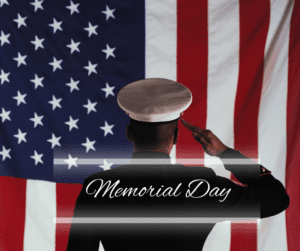
Black military personnel passionately believed in democracy and gave their lives abroad and here at home to see that democracy was protected for all people. Most African Americans serving in the military during the Civil War, World War I and World War II were excluded from any praise, honor, or celebrations/privileges of victory for protecting our democracy. On Memorial Day we honor all veterans who died to protect democracy and human rights abroad, but we make known the plight of and honor Black veterans who died abroad and those who returned home only to die at the hands of fellow citizens because of the commitment by Black veterans to democracy in the United States of America for all people—including African Americans.
Reflections
Nearly 80 years after they were first published, Private Monroe’s words still ring with a hopeful truth:
Morale to the Negro, as with every human being, is like yeast to bread. Morale puffs us up with love and pride for our country. It puffs us up with the will to fight; to resist any change by force to our way of life. Morale, in a broad sense, is knowledge and understanding of, and faith in the high principles our country must represent: The right to live our lives unhampered by strings of prejudice; the right to earn bread; a place in the sun for us and our posterity. And with these necessary stimulants, we Negro soldiers will resist, with every inch of our stature, any threat to our country’s laws; laws that must protect our rights during periods of tranquility.
A portion of Private Merle Monroe’s letter to the Pittsburgh Courier, November 1942
Dorothy Watson Tatem, D.Min., ACC
Senior Associate
Next Step Associates, LLC
Cassandra W. Jones, Ed.D.
CEO & President
_____________________________
[1] Peter C. Baker, “The Tragic, Forgotten History of Black Military Veterans.” In The New Yorker, November 27, 2016.
[2] EJI, Lynching in America, 21.
[3] Equal Justice Initiative. Lynching in America: Targeting Black Veterans (Montgomery, AL., 2017), 8.
Recent Comments